


Modern prefabricated housing prices revealed: What factors determine its cost?
When buying a house, cost is always the core focus of everyone's attention. Modern prefabricated homes like Cloud Know are not fixed in price, but are subject to a combination of multiple factors. Understanding these key variables can help you plan your budget more accurately and easily create an ideal home that meets your needs.
Now, let's break down together and identify the core factors that affect the cost of modern prefabricated housing?
Size and design: laying the foundation for cost

The area (i.e. square feet) of prefabricated housing is the primary factor affecting costs. The larger the house area, the higher the required amount of building materials and production hours, and the cost naturally increases accordingly.
In addition to size, the design scheme also directly affects the price. The number of rooms, spatial layout, and selection of decoration and finishing materials all have an impact on costs. For example, complex layouts require more refined module splitting and production processes, while special decorative finishes may involve customized materials and additional processing flows, all of which can increase costs. Therefore, when planning prefabricated housing, controlling the size and design complexity of the house reasonably is a key step in controlling the budget.
Geographical location: an undeniable hidden cost
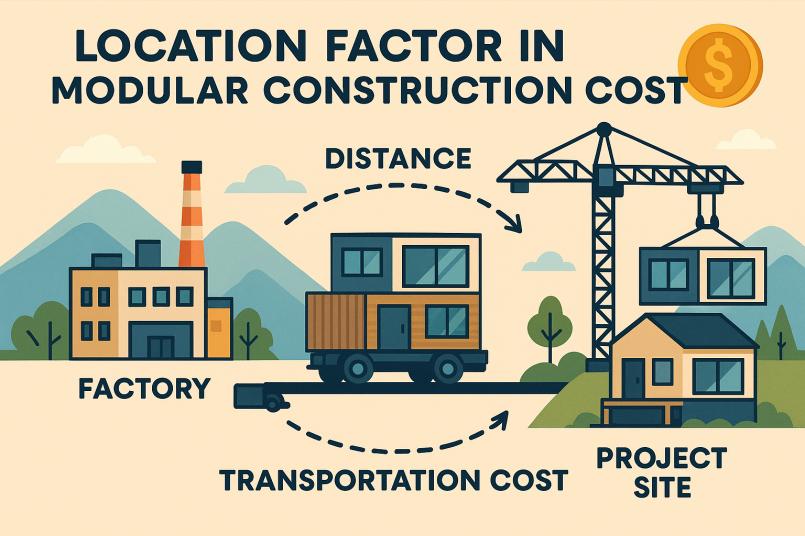
The location where you choose to build prefabricated housing has a significant impact on the total cost, with transportation costs being particularly critical. The modules of prefabricated residential buildings are standardized in factories, but the project locations are different. The distance between the factory and the construction site directly determines the transportation cost. The farther the distance, the more manpower and material resources are consumed during the module transportation process, and the higher the cost.
In addition, there are differences in site preparation and foundation construction difficulty in different regions, which indirectly affect the overall cost. Therefore, when planning prefabricated housing, fully evaluating the cost factors related to geographical location can effectively avoid unexpected budget expenditures in the later stage.
Building material quality and customized finishes: cost variables that highlight texture
The structural framework cost of prefabricated residential buildings is relatively stable, but the quality and grade of interior decoration and finishing are important factors that widen the cost gap. The higher the quality of the selected building materials and the better the decorative grade, the higher the cost naturally.
For example, choosing high-end materials such as solid wood flooring and granite countertops can significantly improve the durability and aesthetics of residential buildings, but it will also increase the budget accordingly. If pursuing personalized style, customizing unique lighting fixtures, exclusive cabinets, etc., it will also bring additional cost expenditures. To find a balance between texture and budget, it is necessary to combine one's own needs and economic strength, and choose building materials and finishes reasonably.
Personalized configuration and additional facilities: additional investment to enhance comfort
Modern prefabricated housing supports rich personalized customization. You can choose various additional facilities according to your living needs, making your "home" more in line with your own habits. These additional configurations are diverse, ranging from small fireplaces and customized lighting fixtures to large porches and high-end appliances, all of which can add comfort and convenience to life.
However, it should be noted that each personalized configuration and additional facility implies additional cost investment. It is recommended to prioritize core needs when choosing, select the most critical configuration for improving the quality of life, and create a practical and personalized living space within the budget.
Labor cost and construction cycle: interrelated cost factors

The cost of prefabricated housing includes both the cost of building materials and the labor cost required for on-site assembly. The level of labor costs is usually closely related to the complexity of building design, the professional level of construction personnel, and the construction period. If we want to accelerate the construction progress, we may need to invest more manpower and resources, which in turn will drive up labor costs.
However, one major advantage of prefabricated housing is that the more construction processes completed by the factory, the less labor and hours required on the construction site, and the overall labor cost will also be reduced accordingly. This is also an important advantage of prefabricated housing in budget control. Therefore, when planning the budget, it is necessary to fully consider the correlation between labor costs and construction cycles, arrange the construction schedule reasonably, and achieve the optimal balance between cost and efficiency.
The interaction of these factors collectively determines the final cost of modern prefabricated housing. Whether it's size design, geographical location, building material selection, or personalized configuration, every decision is closely related to the budget. After understanding these cost influencing factors, it can help you plan your needs more clearly, control your budget, and make Cloud Know prefabricated housing meet both your living expectations and financial planning, making it easy to achieve your ideal living.


